How to Get So Good at Valorant It Feels Like Smurfing
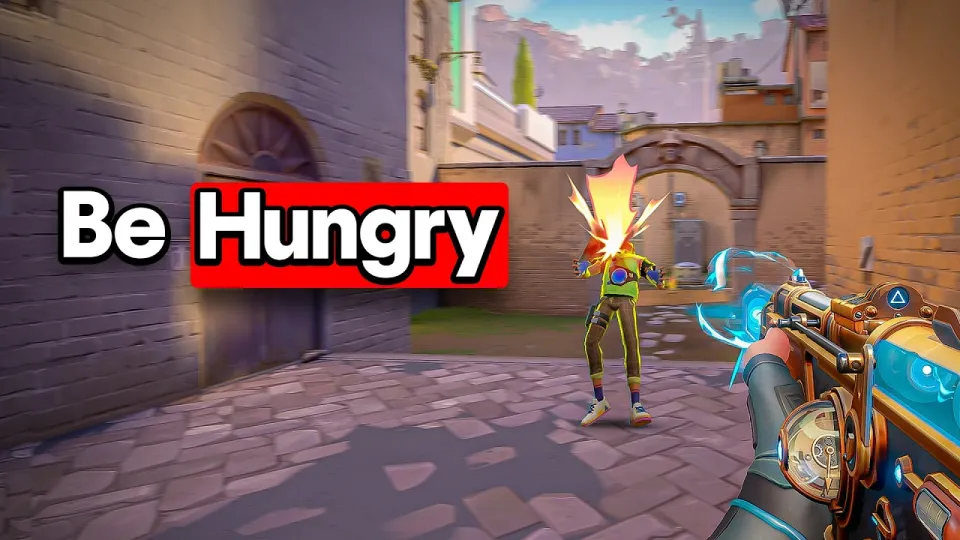
Video: How to Get So Good at Valorant it Feels Like Smurfing
You can order the same kind of articles for your own video to boost it on YouTube and Google. Just message the Telegram bot @sat_sit_bot. Articles with your video embedded are written and posted by the bot itself — on popular topical sites (no ads). Try it free: 50 articles on us.
· based on the channel Konpeki
Key takeaways
- Smurfing in Valorant is not a cheat or a second account — it is the visible result of faster reactions and unpredictable decisions.
- The core loop Konpeki teaches: react to what the enemy does instead of running a memorized script.
- The Immortal Roadmap Program promises 5 divisions in 10 weeks and 500 RR, with a free call before you reserve a spot.
- Movement is a trainable skill: range drills with counter-strafe stops, plus a lower movement-error multiplier to see your own habits.
- Ranking up comes from simple, repeatable plans — the same way athletes prepare for a match, not from highlight-reel plays.
Getting so good at Valorant that it feels like smurfing comes down to two habits: reacting to what the enemy actually does instead of running a memorized script, and staying unpredictable so opponents cannot pre-aim your routine. Konpeki builds his whole coaching around this idea — cleaner movement, faster reads, simpler plans — and backs it with the Immortal Roadmap Program, where you can book a free call and reserve a spot to see whether the 5-divisions-in-10-weeks track fits you.
Smurfing, in this context, has nothing to do with buying a low-rank account. It is what a lobby looks like when one player is simply a step ahead: they trade every duel, they appear where the enemy did not expect them, and their mechanics never break under pressure. That gap is built from repeatable skills, not talent.
What smurfing actually looks like in a Valorant lobby
A player who feels like a smurf wins duels before the fight starts, because the enemy has already committed to the wrong angle. Watch a high-rank player in a low-rank lobby and you will notice three things: they rarely stand still in the open, they almost never take a fair 50/50, and they punish every sound cue the enemy gives away. None of that requires Radiant aim. It requires reading the situation a half-second earlier than everyone else.
That half-second is the whole product. It shows up as pre-firing a common angle, holding a weird off-angle for two rounds and then swinging wide on the third, or simply walking away from a fight that is already lost. Low-rank players lose most rounds by taking fights they did not need to take. Players who look like smurfs win those same rounds by not taking them at all.
React to the enemy instead of running a script
The single biggest change you can make is to stop executing a memorized plan and start answering the enemy's last action. Most players below Diamond enter a round with a fixed idea — rush A, hold this angle, push mid — and then keep forcing it even when the information says otherwise. Reaction-based play flips that order: you gather a cue, then choose.
A practical way to train this:
- On defense, hold a position only as long as it gives you information. The moment you hear two sets of footsteps rotating away, move.
- On attack, treat the first contact as a question, not a command. If the first duel goes badly, the correct answer is usually to regroup, not to flood the site.
- After every death, ask one question: what did the enemy do that I did not react to? Write the answer down for ten games and patterns will appear fast.
- Stop re-peeking the same angle after being traded. The enemy now expects it, and predictability is the exact opposite of smurfing.
This is why the advice "react to the enemy and stay unpredictable" compresses the entire topic so well. It is not a trick; it is a decision-making order.
Build movement you can trust under pressure
Movement is the mechanic that separates players who look calm from players who look panicked, and it is fully trainable in the Range. The goal is a counter-strafe stop: you release or tap the opposite key so your character halts instantly, then fire. If you shoot while still sliding, your first bullet goes somewhere you did not aim.
A simple daily block, 10 to 15 minutes:
- Pick a bot distance you can hit about 70 percent of the time, not 100 percent. Difficulty should sit just above comfort.
- Strafe left and right with A and D, firing one tap each time your movement changes direction. The shot lands on the stop, not during the slide.
- Alternate between stopping completely and firing mid-switch, so both patterns become automatic.
- Finish with 20 kills on hard bots using only Sheriff or Guardian to force discipline on the first bullet.
One viewer tip worth stealing: turn the movement error graph on and set its multiplier to 0.5. It exaggerates your own sloppiness on screen, which makes bad habits obvious far faster than watching a clean crosshair.
Make your utility and economy decisions boring
Good players look like smurfs partly because their utility usage is unremarkable and efficient. They do not save a Smoke for a highlight; they use it to block a specific angle at a specific time. The rule is simple: every piece of utility should answer a question you have about the round — where is the enemy, can they see me, can they push me.
Economy follows the same logic. Buying a full set with no utility is usually worse than a cheaper buy that includes a Flash or a Smoke, because utility is what lets you take space without duelling. Track your own habits: if you regularly end rounds with unused abilities, you are playing with a smaller toolkit than the enemy for no reason.
Turn practice into a repeatable routine
Improvement in Valorant is not a mood, it is a schedule. The players who climb fastest treat the game like a sport: a warm-up, a focused block, a review, then ranked. Skipping the warm-up and jumping straight into competitive is the equivalent of sprinting cold — your first three games are wasted on loosening up.
A workable weekly structure:
- 10 to 15 minutes of Range or Deathmatch before every ranked session.
- Two or three ranked games maximum in one sitting, then stop while you are still playing well.
- Ten minutes of review — one death, one round, one decision you would change.
- One dedicated VOD or coaching session per week, where someone else points out what you cannot see about yourself.
That last point is where structured coaching earns its keep. Konpeki's Immortal Roadmap Program is built around a guaranteed climb of 5 divisions in 10 weeks, with a free call first to check whether you are a good fit. If you would rather start free, his Discord hosts coaching resources and office hours at https://www.discord.gg/UnRETVmRpV, and you can follow him on Twitch at https://www.twitch.tv/konpekichan, on X at https://twitter.com/coachpeki, and on TikTok at https://www.tiktok.com/@coachpeki.
Common questions players ask about climbing
A few recurring doubts come up whenever this topic is discussed, and they are worth answering directly. Console players often wonder whether coaching applies to them — it does, because crosshair placement, decision-making and utility timing transfer to controller play, even if movement drills need adjusting. Beginners ask what to do first; the honest answer is to pick two agents, learn one map pool, and spend a month on fundamentals rather than chasing a rank. Others worry about age or eligibility for structured programs — most coaching tracks are open to anyone who can commit the time, with the free call existing exactly to sort that out. And the most common frustration of all: teammates who seem to play like bots. You cannot fix them, but you can stop dying to the same situation they create by baiting you into bad fights.
Final thoughts on playing above your rank
Playing so well that it feels like smurfing is a byproduct of three boring things done consistently: reacting to real information, moving with control, and keeping your plans simple enough to execute under pressure. There is no secret agent, no hidden sensitivity, and no shortcut that skips the reps. Konpeki's breakdown of this topic is a useful frame because it refuses to sell mechanics as magic — it treats ranked like a sport with a warm-up, a game plan and a review. Pick one habit from this article, run it for two weeks, and measure the result before adding another. If you want a structured path with a guaranteed climb, start with the free call at https://roadmap.gg/v/lUfrMRb74SE.
Questions & answers
Do I need Radiant-level aim to look like a smurf in my rank?
No. Most of the gap comes from decision-making and positioning, not raw aim. If you stop taking unnecessary duels, hold off-angles, and react to enemy rotations, you will already look a tier above your current rank. Mechanics matter, but they are the last thing that separates a Diamond player from an Immortal one.
Is there a coaching option for console players?
Yes. Decision-making, crosshair placement and utility timing transfer directly to controller play, so the same principles apply. Movement drills need small adjustments because controller strafing and stopping behave differently, but the review process and round planning stay identical.
How much time should I spend in the Range before ranked?
Ten to fifteen minutes is enough if it is focused: bot strafing with counter-strafe stops, then a short Deathmatch. The point is to warm up the first-bullet discipline, not to grind aim for an hour. Skipping it entirely usually costs you your first two ranked games.
What does the Immortal Roadmap Program actually include?
It is a structured coaching track that advertises a guaranteed climb of 5 divisions in 10 weeks, roughly 500 RR. You start with a free call to check whether you are a good fit before reserving a slot, since spots are limited. The link in the description is the fastest way to apply.
Source: How to Get So Good at Valorant it Feels Like Smurfing · Markdown version