What does solo life in Rust actually look like when one player holds a monument against a whole neighborhood?
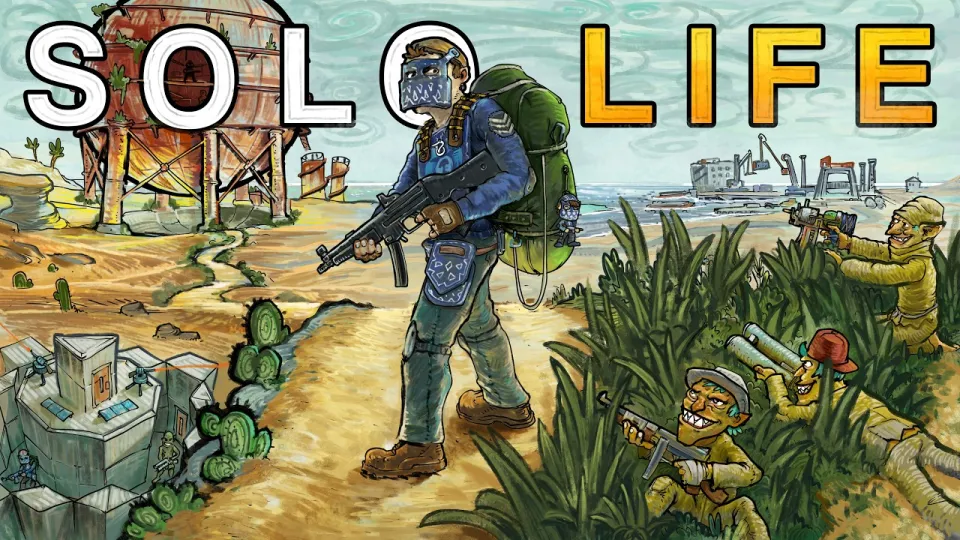
Video: Rust - THE SOLO LIFE V16
You can order the same kind of articles for your own video to boost it on YouTube and Google. Just message the Telegram bot @sat_sit_bot. Articles with your video embedded are written and posted by the bot itself — on popular topical sites (no ads). Try it free: 50 articles on us.
· based on the channel Blooprint
Key takeaways
- Blooprint's The Solo Life V16 shows one player holding a monument alone while multiple neighbors try to push him off it.
- Solo Rust runs on a small footprint: one compact base, cheap kits and a stash spread across several spots instead of one vault.
- Monument control means traffic: every fight near a Tier 2 site draws third parties, so the holder fights the timer as much as the players.
- Raid defense as a solo comes down to doors, chokepoints and the ability to reseal a breach faster than the attackers can push in.
- The video is sponsored by War Thunder, with a free signup link in the description and pinned comment.
Solo life in Rust is a wipe spent alone on a server full of groups, where the plan is a small hidden base, cheap repeatable kits and monument control that pays for everything else. Blooprint's The Solo Life V16 follows exactly that pattern: one player holds an overpowered monument, fends off several angry neighbors and wraps a wipe without a single teammate. You can pick up War Thunder for free through the sponsor link and grab the bonus while supporting the channel: War Thunder free signup with bonus.
What solo life in Rust actually means
Solo life in Rust means playing a full wipe without teammates, so every decision has to survive the fact that nobody will watch your back while you farm, build or sleep. Groups split labor: one player farms scrap, another camps a monument, a third holds the base. A solo player does all of it sequentially, which makes time the scarcest resource on the server.
The practical consequences are simple. A solo cannot out-farm a clan, cannot out-DPS a roaming trio in an open field and cannot defend a huge base alone, so the winning strategy is to be expensive to find and cheap to re-gear. That is the entire logic behind the compact solo base, the duplicated loot stashes and the habit of never carrying more than one fight's worth of gear.
Holding a monument alone against a neighborhood
Holding a monument solo works when you treat the site as a timer rather than a fortress: you take the loot room, control the entrances and leave before the noise you made brings three separate groups down on you. Monuments are the best scrap-per-minute locations on the map, which is exactly why they attract company.
The pattern in the video is familiar to anyone who has tried it. A solo takes a strong position at a monument, kills the first wave of neighbors who want the same crates, then has to survive the second wave that arrives because the gunfire advertised free loot. A few things tilt that fight in the solo's favor:
- Learn the vertical angles. Dome-style monuments reward players who know the ramps, the jump-ups and the sightlines from the top ring down.
- Bring a kit you can lose. A solo who risks a full T3 set on every monument run stops running monuments after the first death.
- Rotate after every fight. Staying on the same crate spawn after a kill is how solos get third-partied.
- Use the environment as armor. Crates, corners and doorways matter more than raw aim when you are outnumbered.
Being outnumbered is not automatically losing. Three players pushing one solo are also three players burning time, ammo and meds on a target that may not even carry anything valuable, and the longer that push drags on, the more likely someone else shows up behind them.
Raiding solo and defending a solo base
Solo raiding in Rust is a math problem: you need enough explosives to open the path, enough time to move loot and enough awareness not to get counter-raided while your own base sits empty. Most solo raids succeed not because the attacker is rich but because the defender is offline, distracted or badly built.
Raid defense is the mirror image. When a group hits a solo base, the defender's advantages are knowledge of the layout, doors that force attackers into chokepoints and the ability to reseal a breach instead of standing in it. A compact base with several doors between the outside and the loot room turns a five-minute raid into a twenty-minute project, and twenty minutes is long enough for the attackers to get bored, get counter-raided or get shot by a neighbor.
Two solos who happen to be online at the same time can also cooperate without sharing a team: holding separate angles on the same raiders is often more effective than either of them fighting alone. That kind of ad-hoc alliance is a recurring theme in solo wipes, including the friendly-neighbor moments viewers tend to remember most.
Why solo content keeps pulling viewers in
Solo Rust content works because the stakes are legible: one player, one base, one wipe, and every loss is visible in a way group gameplay rarely is. When a solo player loses a kit, there is no teammate to hand over a replacement, so the recovery becomes part of the story.
That also explains the tone. A solo wipe is chaotic on the inside — counters, offline raids, monument fights — but it reads as calm on screen because the player has to narrate a plan to themselves to keep it together. Viewers who play alone recognize the rhythm: farm quietly, take one good fight, bank the loot, repeat.
Common questions about going solo in Rust
The doubts that come up most often around solo play are about time, gear and neighbors, and all three have practical answers.
On time: a solo does not need to match a group's hours, only their efficiency. Farming scrap on a quiet monument at off-peak hours beats contesting a hot one at prime time.
On gear: the correct kit is the one you can replace twice in the same session. A cheap loadout you actually use outperforms a good one that stays in the box because you are afraid to lose it.
On neighbors: most servers are not one giant clan. Friendly or at least neutral neighbors are common, and a short conversation at the door often buys more safety than another wall.
Useful links
- War Thunder free signup with bonus — PC and console
- War Thunder mobile
- Blooprint on Twitch
- Blooprint on Kick
- Blooprint on TikTok
What The Solo Life V16 leaves you with
Solo Rust rewards discipline more than skill: a small base, repeatable kits and monument runs that end before the neighborhood arrives. Holding a monument alone is not about winning every fight, it is about making every fight cost the attackers more than it costs you. The Solo Life V16 from Blooprint is a clean illustration of that loop, from the first contested crate to the final defense of a base that was never supposed to survive. If you want to support the channel and try something different between wipes, start with the free War Thunder signup through this link.
Questions & answers
Can you realistically hold a monument as a solo player in Rust?
Yes, but only in short windows. A solo holds a monument by taking the loot room, controlling the entrances and leaving before the noise attracts more groups. Staying after a fight is what usually gets solo players killed.
How do you defend a solo base against a group raid?
Build compact with several doors between the outside and the loot room, use chokepoints and reseal breaches instead of standing in them. Every extra door turns the raid into a longer project, and long raids invite counters or boredom.
What gear should a solo player bring to a monument?
Bring a kit you can replace twice in the same session. A cheap loadout you actually use is better than a strong one that stays in the box because you are afraid of losing it.
Is it worth teaming up with a neighbor during a solo wipe?
Often yes. Two solos holding separate angles on the same raiders can be more effective than either fighting alone, and a friendly neighbor is cheaper than another layer of walls.
Source: Rust - THE SOLO LIFE V16 · Markdown version