Marvel Rivals Hardstuck Claims Under Review
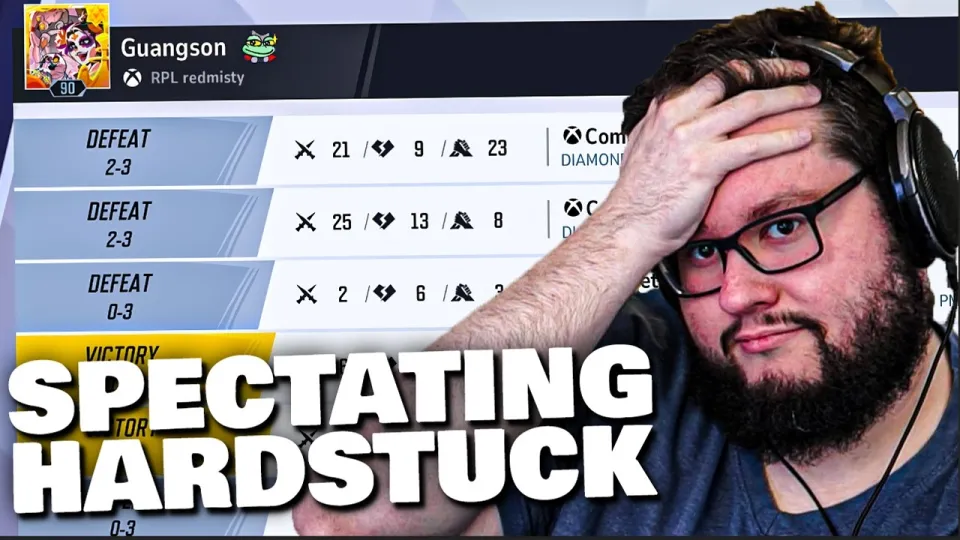
Video: I Spectated Someone Who Claimed To Be Hardstuck In Marvel Rivals
You can order the same kind of articles for your own video to boost it on YouTube and Google. Just message the Telegram bot @sat_sit_bot. Articles with your video embedded are written and posted by the bot itself — on popular topical sites (no ads). Try it free: 50 articles on us.
· based on the channel Flats
Key takeaways
- Flats spectated a Marvel Rivals player in Grandmaster who claimed his teammates were holding him back.
- The player was a Cloak & Dagger main who spent most of the game as Dagger and rarely swapped to Cloak.
- He walked past a nearby health pack while searching for healing, a detail highlighted in the review.
- His Spider-Man background was used to explain the refusal to take responsibility for his own mistakes.
- Viewers noted that players with negative win rates can still climb in Marvel Rivals' ranked system.
Marvel Rivals ranked complaints usually follow the same script: the player insists they are stuck because of teammates, not because of their own play. In a Flats spectate session, a Grandmaster player claiming to be hardstuck was reviewed live, and the replay showed the opposite of what he argued — a Dagger-only Cloak & Dagger, missed health packs and positioning errors that had nothing to do with the rest of the team. Anyone who wants to watch similar reviews live can tune into Flats on Twitch, where these spectate breakdowns are streamed.
What the Marvel Rivals hardstuck spectate actually showed
The core finding: the player's rank was Grandmaster, yet his decisions looked far below that level. Flats followed the match from the player's point of view and paused on the moments that decided fights. The recurring theme was not bad luck but repeated, correctable mistakes.
- One half of the kit ignored. The player locked Cloak & Dagger but effectively played Dagger only, using the healing side of the kit while leaving Cloak's damage and escape tools unused. That turns a flexible strategist into a heal-bot with no playmaking.
- A health pack he walked past. During a retreat, the player wandered past a health pack while still looking for healing, a moment the review highlighted as emblematic of autopilot play.
- Ultimates spent without a plan. Several support ultimates went out with no follow-up from the team, and at least one enemy ultimate was wasted in a way that showed the same lack of planning on the other side.
- No accountability. When the review pointed out errors, the player's response followed the pattern of blaming teammates rather than adjusting.
Why the Cloak & Dagger one-trick fails in Marvel Rivals
Cloak & Dagger is designed as a stance-switching strategist, and playing only Dagger throws away half the character. Dagger provides healing, area denial and a blinding projectile; Cloak brings damage, a damage-amplifying veil and the team-saving Dark Teleportation. A player who never swaps is not playing the hero — they are playing a weaker version of it.
The practical fix is situational, not mechanical:
- Swap to Cloak when the team needs burst damage to finish a low-health target or to blind an incoming push.
- Use Dark Teleportation to dodge high-impact ultimates rather than as a panic button.
- Return to Dagger for sustained healing, but keep the cooldowns of both stances in mind before committing.
- Practice the swap timing in quick match until switching stances becomes reflexive.
A strategist who uses both halves of the kit creates pressure that the enemy has to answer. A Dagger-only player just tops up health bars while the rest of the lobby decides the fight.
The habits that keep players stuck in Marvel Rivals ranked
The replay exposed a set of habits that show up in almost every hardstuck case. None of them require better aim to fix; they require attention.
- Autopilot pathing. Walking past a health pack while hunting for healing means the player is following a route instead of reading the map.
- Ultimate discipline. Support ultimates are the most valuable cooldowns in the game. Spending one without a plan, or holding it until the fight is already lost, wastes the hero's biggest contribution.
- Blame as a default. A player who explains every death with a teammate's mistake stops reviewing their own decisions. The review showed a player who could describe what his team did wrong in detail but had no answer for his own positioning.
- Ego versus evidence. Claiming to be hardstuck while sitting in Grandmaster is itself a signal. Grandmaster is a high rank; the problem is not the rank, it is the plateau inside it.
What viewers took away from the review
The audience reaction focused on how familiar the player's behavior felt. Several themes dominated:
- The teammate lottery. The most common reaction was recognition: this is the player who shows up in your promotion match. The irony is that the player proved teammates can hold you back — just not in the way he intended.
- Rank inflation concerns. Players in lower tiers pointed out that a Grandmaster game looking like this says something uncomfortable about how easy it is to climb with a negative win rate.
- The Spider-Man factor. The player's background as a Spider-Man main was treated as an explanation, not an excuse: dive heroes reward individual aggression, and that mindset transfers badly to a strategist who has to enable the team.
- The name change joke. The most repeated punchline was that someone would be buying a name change after the humiliation.
How to tell if you are actually hardstuck in Marvel Rivals
Being hardstuck is a statistical claim, not a feeling, and it can be checked. A player who genuinely belongs higher up will show a positive win rate over a large sample, strong personal stats relative to rank, and close losses where their own decisions mattered. A player who is plateauing honestly will usually find one or two repeatable errors — a stance never swapped, a cooldown always held too long, a retreat route that ignores health packs.
The fastest test is to watch one of your own replays from the enemy's point of view. If the mistakes look obvious from that angle, they are obvious to your opponents too. Fixing one habit per session beats grinding more games with the same routine.
Where to watch the full Marvel Rivals spectate
The unedited review, with the full match and live commentary, is on the Flats channel. The main hub for these sessions and for live spectates is the Flats Twitch channel, where the breakdowns happen in real time.
All official links from the video:
- https://www.twitch.tv/flats
- https://discord.gg/flats
- https://twitter.com/Flats_Ow
- https://www.tiktok.com/@flats_ow
- https://www.facebook.com/FlatsTTV
Final thoughts on the Marvel Rivals hardstuck claim
Flats' spectate makes the case that hardstuck complaints in Marvel Rivals are usually self-diagnoses that miss the actual problem. The player in this review had a high rank, a flexible hero and every tool needed to climb further, yet he played half a character, ignored a health pack in plain sight and blamed the team. The lesson transfers to any rank: review your own cooldowns and pathing before you blame the lobby. For more breakdowns in this format, follow Flats on Twitch and catch the next spectate live.
Questions & answers
What does "hardstuck" mean in Marvel Rivals?
Hardstuck describes a player who believes their rank will not improve no matter how many games they play. In practice, it usually means the player has hit a plateau caused by repeatable habits — unused parts of a hero's kit, poor cooldown usage or autopilot pathing — rather than by matchmaking or teammates alone.
Is Cloak & Dagger viable if you only play Dagger?
It works as a pure heal-bot in lower ranks but caps your impact quickly. Cloak's damage, blinding veil and Dark Teleportation are the playmaking half of the kit, and skipping them removes the strategist's best tools for saving fights. Learning to swap stances situationally is what separates an average Cloak & Dagger from a strong one.
Can you climb in Marvel Rivals with a negative win rate?
Yes, because ranked systems award points for performance and streak bonuses, so a player can gain rank even while losing more games than they win. That is why some high-rank lobbies contain players whose decision-making looks below the tier — a point viewers raised after seeing this Grandmaster replay.
Why do Spider-Man players struggle when they switch to support?
Dive heroes like Spider-Man reward solo aggression, fast target selection and taking risks without waiting for the team. A strategist has to do the opposite: hold position, track cooldowns and enable teammates. Carrying the dive mindset into a support role leads to bad positioning and blame when fights are lost.
Source: I Spectated Someone Who Claimed To Be Hardstuck In Marvel Rivals · Markdown version